
Teaming is the Way

Updated: Nov 10

A project changes direction. A new person joins the group. Someone notices a problem that others have missed. The next step depends on people connecting what they know and deciding how to act together.
These are moments when teaming matters.
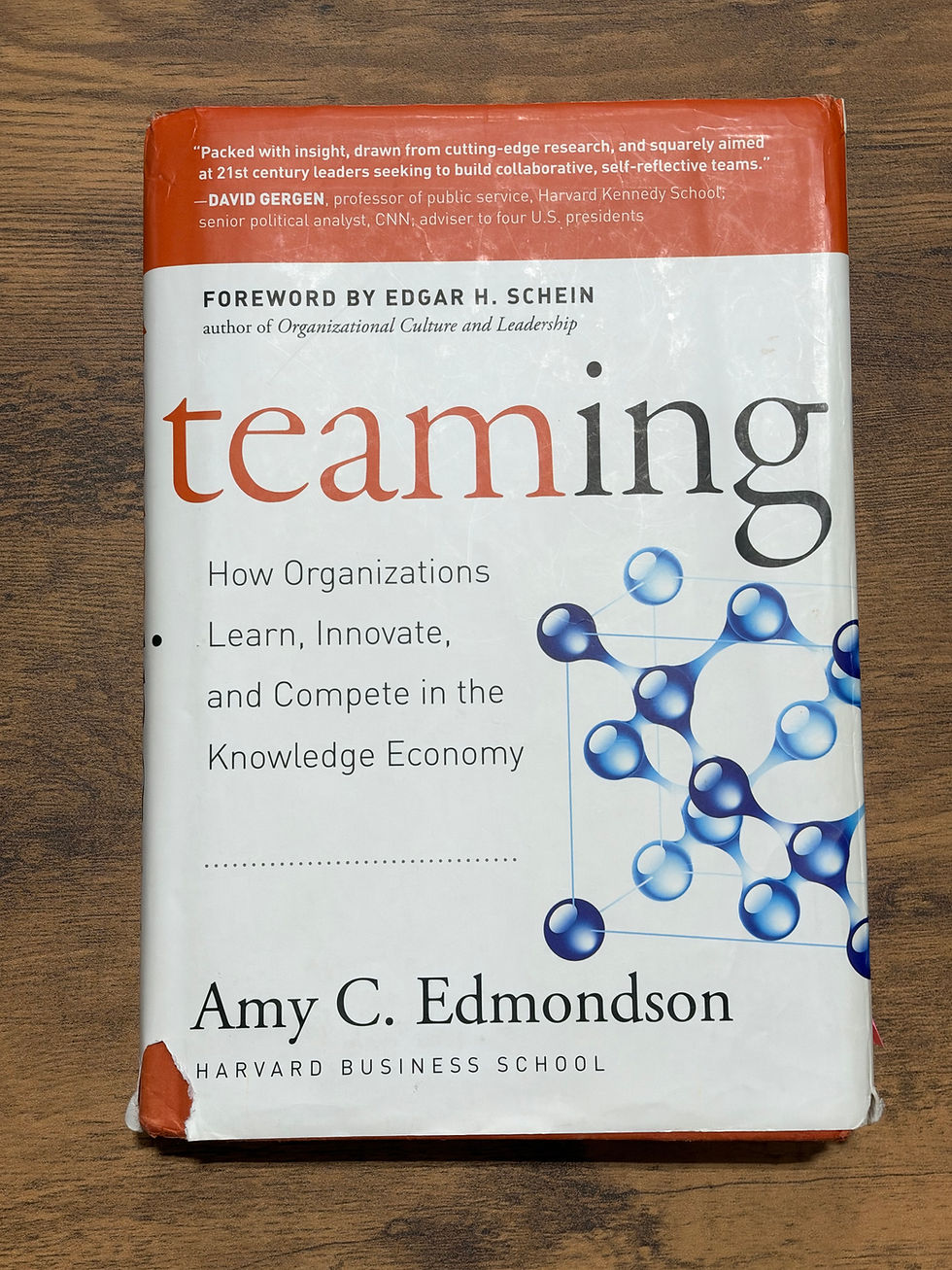
Our approach to Teaming is informed by Amy C. Edmondson’s book, Teaming: How Organizations Learn, Innovate, and Compete in the Knowledge Economy. She captures the idea succinctly: “Teaming is teamwork on the fly.”
This book link is an affiliate link. As an Amazon Associate we earn from qualifying purchases.
People often need to coordinate and collaborate before they have an established way of working together. They bring different knowledge, encounter changing conditions, and must learn how to connect their contributions as the work unfolds.
At Thriving Teams Institute, we believe better team members make better teams. Helping people develop the capabilities to work well with others is the purpose behind our work.
When we say “Teaming Is the Way,” we mean making teaming part of how we approach a shared task: contributing what we know, learning from others, coordinating our actions, and adjusting as the situation changes.
Teaming Goes Where the Work Goes
Some teams work together for years. Other groups form for a project, a school assignment, a community event, or a problem that needs attention now. People may need to work across departments or organizations with colleagues they have only just met.
We use teaming to describe the active work of connecting people’s contributions toward a shared purpose. It includes understanding who depends on whom, making information available, and checking whether people understand the same plan.
An established team needs those practices. So does a group coming together for the first time. As membership and circumstances change, people need to revisit how they will work together.
Better Team Members Help Others Contribute
Individual expertise matters. So does making that expertise useful to other people.
A capable team member explains their reasoning, asks for help when needed, and shares information early enough for someone else to act. They follow through on commitments and communicate when a commitment is at risk.
They also remain open to what someone else can see. A colleague with different experience may notice a constraint, question an assumption, or suggest an approach the group has overlooked.
Inviting that contribution takes more than asking whether everyone agrees. Give people time to think. Ask whose knowledge is missing. Check whether a quieter participant has information the group needs. Then examine the contribution before settling on a decision.
Leaders need to practice these behaviors, too. They also shape the conditions in which others contribute through the time, authority, resources, and responses they provide.
Make Room for Questions and Constructive Challenge
People need to be able to acknowledge uncertainty, raise concerns, and disagree about the work without being humiliated or dismissed. That is why psychological safety matters to teaming.
Standards and accountability still matter. A team can examine a missed commitment directly while asking what happened and what needs to change.
Consider a handoff that keeps arriving late. One person may see poor follow-through. Another may be waiting for an approval nobody else knows about. Asking what each person understood can reveal gaps in understanding and a problem the team can address.
Useful questions include: What did you notice? What led you to that conclusion? What information would cause us to reconsider?
Constructive challenge asks people to explain and test their thinking. Everyone, including the person raising the concern, needs to remain willing to change their view.
Apply the Learning in the Next Iteration
Teams learn through examining their work and applying what they discover. A conversation becomes useful when it informs a decision or changes what people do next.
After a meeting, handoff, or shared challenge, compare the intended result with what happened. Explore what helped, what got in the way, and what the group will adjust.
Different situations require different responses. A recurring error may call for a clearer process or an additional check. An unfamiliar problem may require a small, carefully planned test, with clear limits and a question worth investigating.
Choose one specific change your group or team can apply and practice together.. For example: “For the next two weeks, whenever we hand off work, we will confirm who is responsible for the next step, when it is due, and what they need to complete it.”
Then revisit the agreement. Did people use it? Did it help? What needs to change on the next iteration?
Put Teaming Into Practice
Training can introduce a skill. Shared practice gives people opportunities to use it when their actions affect one another.
At our Bridge 3 Mission Ready Learning Lab in Cypress, Texas, we use Design-Based Learning experiences, including drone missions, RC vehicle challenges, LEGO® SERIOUS PLAY®, and other hands-on activities, to create opportunities to practice teaming skills.
A mission can make coordination visible. Who had the information? How did the group decide? What happened when the plan stopped working? Guided debriefs help participants examine those interactions and identify what they can apply to everyday work.
We also offer virtual team-building experiences using the lab’s drone cages and video conferencing platforms.
Teamstigator®, our version of team coaching, helps teams work through real challenges while examining how they communicate, question assumptions, and make decisions together. Assessments and facilitated debriefs can provide another starting point for development.
These offerings connect through a common purpose: helping people practice teaming, reflect on their experience, and apply useful changes into the work they share.
Start With the Group in Front of You
Teaming matters at work, at school, at home, and in our communities. The responsibilities and relationships differ, but each setting gives us opportunities to listen, clarify expectations, offer help, and follow through.
Think about a group you are part of. What do others need from you to move the shared work forward? What do you need from them? What is one behavior you could practice together?
At Thriving Teams Institute, we help people develop capabilities they can bring to different groups, teams, and missions.
Explore our training and experiences, or tell us about the teaming challenge you want to address.
Teaming Is the Way.


Comments